Planting Trees Can Reduce Poverty and Slow Climate Change

Planting trees can reduce poverty and slow climate change, The Daily Guardian, By Jacqueline Skalski-Fouts, 29 August 2020.
• Arabic: Beirut Taimes, 30 Aug 2020.
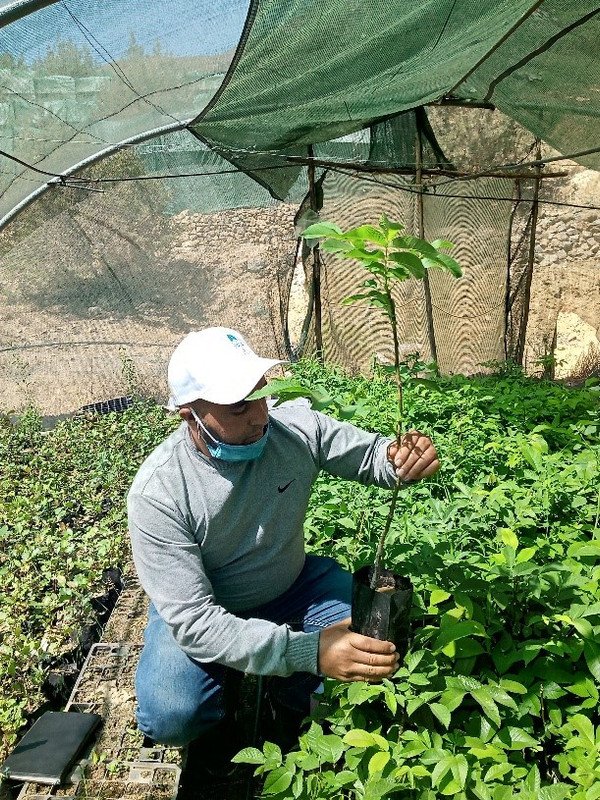
Photo by the High Atlas Foundation, Morocco.
Humanitarian crises have recently been declared in Sudan, Yemen, Niger, Mali, and Somalia—affecting at least 450,000 people—due to flash floods and landslides. Areas with low tree coverage and poor soil quality are more likely to experience flood and drought, as the soil is less able to retain excess rainwater.
Countries like Morocco, which are highly susceptible to long periods of drought, are welcoming reforestation efforts to improve agriculture. In partnership with civil society, the Moroccan government will plant 800,000 trees across the country by 2024.
Like Morocco, many are turning to agroforestry, or tree-farming, as an eco-friendly solution to climate issues. Globally, at least 650 million hectares of land (13.3% of total farming land) are used for agroforestry systems.
Planting trees also diversifies farming. Estimates claim forest-farms can be eight times more profitable than staple crops like grain, which can increase farmers’ incomes and reduce rural poverty.
Deforestation and poverty are linked
Almost 30 percent of the world’s 821 million malnourished people live in Africa, the highest prevalence by region. Despite socioeconomic improvements in Morocco (1.7 million Moroccans have moved out of poverty in the last decade), droughts continue to threaten agricultural production, which accounts for 20 percent of GDP and 30 percent of the Moroccan workforce. Low crop yield can exacerbate poverty, especially in rural regions, as two thirds of people who are in extreme poverty work as agricultural laborers.
However, African farmers are beginning to diversify their incomes, a method Morocco has been successful with in improving rural economies and reducing poverty throughout the region. For Moroccan farmers, this has meant investing in cash crops, such as fruit and argan trees, as opposed to producing principal crops, such as wheat and barley.
An oasis in the desert
Forest-gardens, or “food forests,” have been around since ancient times. These cultivated forests contain several layers. The top layer, usually fruit or nut trees, provides shade and traps moisture for smaller edible plants, such as shrubs and root crops.